Questionnaire for Postamputation Pain (Q-PAP)
A multidimensional self-report questionnaire to assess and monitor pain after amputation, for use in research and clinical practice (Ortiz-Catalan & Limakatso, Adv. Rehabil. Sci. Pract., 2026).

What is the Q-PAP?
The Questionnaire for Postamputation Pain (Q-PAP) is a self-report instrument that assesses the two main components of postamputation pain, that is Phantom Limb Pain (PLP), perceived in the missing limb, and Residual Limb Pain (RLP), perceived in the remaining part of the limb. For each type of pain it records intensity, frequency, and interference with daily activities and sleep. For PLP, it also records the perceived position, movement, and sensation in the phantom limb.
The Q-PAP is completed by the patient and comprises 17 items. Most questions refer to pain at the time of completion, which makes the questionnaire suitable for repeated use: monitoring patients in clinical practice, measuring outcomes in research, and long-term follow-up.
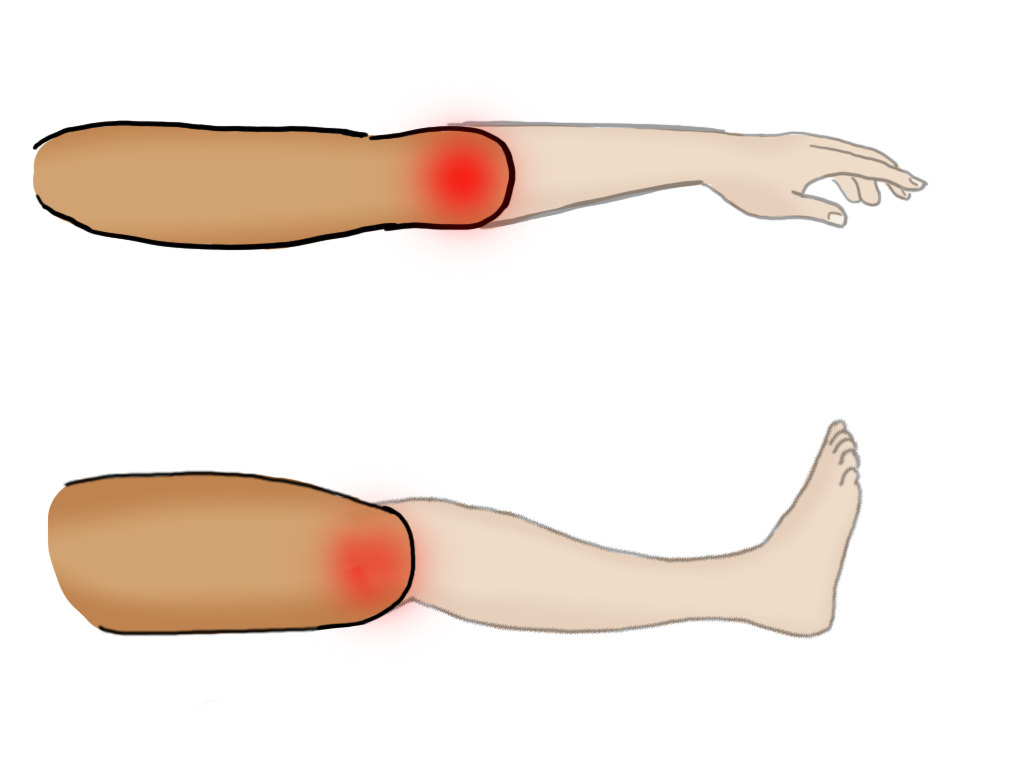
Residual Limb Pain
5 Items
- Numeric intensity
- Verbal intensity
- Frequency
- Interference with activities of daily living
- Interference with sleep
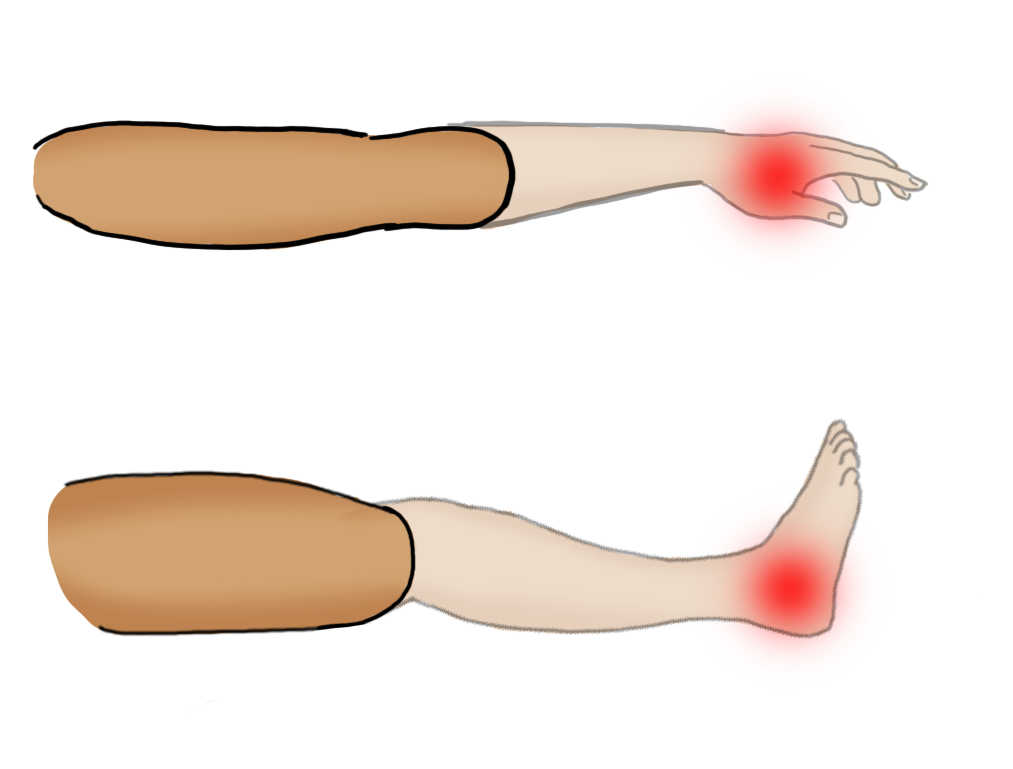
Phantom Limb Pain
9 Items
- Numeric intensity
- Verbal intensity
- Frequency
- Interference with activities of daily living
- Interference with sleep
- Location
- Phantom limb position
- Phantom limb movement
- Phantom limb sensation
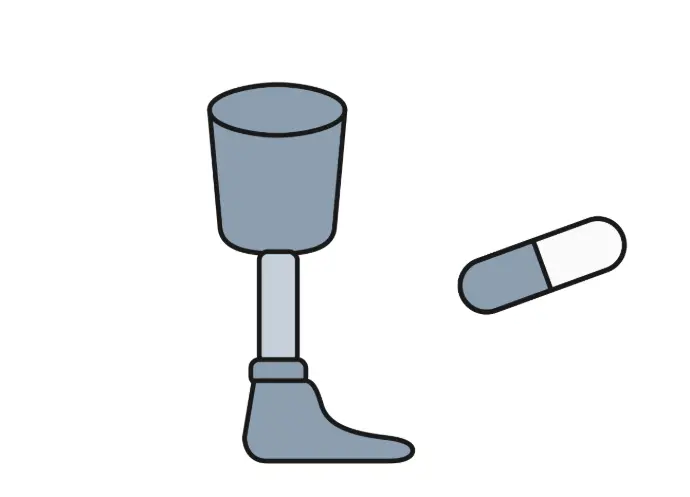
Situational Changes
3 Items
- Prosthesis
- Medication
- Comments
Download and use the Q-PAP for free!
The Q-PAP is free to use. No permission, license fee, or registration is required to use it in clinical practice, in research, or in teaching, whether the setting is commercial or not. If you use the Q-PAP in a publication or report, cite the source article:
Ortiz-Catalan M, Limakatso K. Development and Content Validation of the Questionnaire for Postamputation Pain (Q-PAP): An Expert Delphi Study. Advances in Rehabilitation Science and Practice. 2026;15:1-8. doi:10.1177/27536351261484074
Q-PAP version 1.4 paper form
The 1.4 version in English was the result of an international expert study that included 8 countries (Ortiz-Catalan & Limakatso, Adv. Rehabil. Sci. Pract., 2026).

Q-PAP mobile
The latest version of the Q-PAP, and its short-form (SF-QPP), are implemented and freely accesible in the mobile application RehabTrack (Androind and iOS).
Q-PAP History
The Q-PAP began in 2014 as the Questionnaire for Phantom Limb Pain (Q-PLP), developed by Max Ortiz-Catalan during the first investigation of Phantom Motor Execution (PME) as a treatment for PLP. Its first electronic version was implemented by Rannveig A. Guðmundsdóttir, together with the Weighted Pain Distribution (WPD), a metric combining the intensity and duration of pain episodes.
Over the past decade, the Q-PAP was revised repeatedly as it was used in further studies, including the clinical trial of PME in chronic intractable PLP (Ortiz-Catalan et al., The Lancet, 2016), a trial of surgical treatments for postamputation pain (Pettersen et al., Trials, 2023), and more recently in wartime conditions in Ukraine (Ksenchyna et al., Journal of Pain Research, 2026), where its short-form version was also developed. Each revision followed the research questions of the study at hand and the clinical feedback it produced. It current version (Q-PAP v1.4) was the result of an international expert Delphi study from eight countries (Ortiz-Catalan & Limakatso, Adv. Rehabil. Sci. Pract., 2026).
The Q-PAP scope widened from PLP alone to postamputation pain more broadly, adding residual limb pain and phantom limb sensations. Items that patients could not answer reliably on their own were reworked or dropped. Phantom limb sensation and movement were first rated on a Numerical Rating Scale, which participants often misinterpreted, so they were removed and later reintroduced using verbal descriptors, and the way pain frequency is asked has changed a couple of times until settle in the current version.
Three topics present in earlier versions were excluded from the current one (Ortiz-Catalan & Limakatso, Adv. Rehabil. Sci. Pract., 2026). Neuroma pain was removed because assessing it requires clinician-administered tests such as Tinel's test, which conflicts with a self-report instrument. Bone pain was removed as too specific, since it is mainly relevant to patients with bone-anchored prostheses, who are a minority. Telescoping was excluded because its main rationale, matching visual feedback to the perceived location of the limb, has been challenged by the Stochastic Entanglement hypothesis (Ortiz-Catalan, Frontiers in Neurology, 2018), and because of its limited relevance for research and clinical practice. All three can still be added as study-specific questions where clinicians are available to help answer them.